




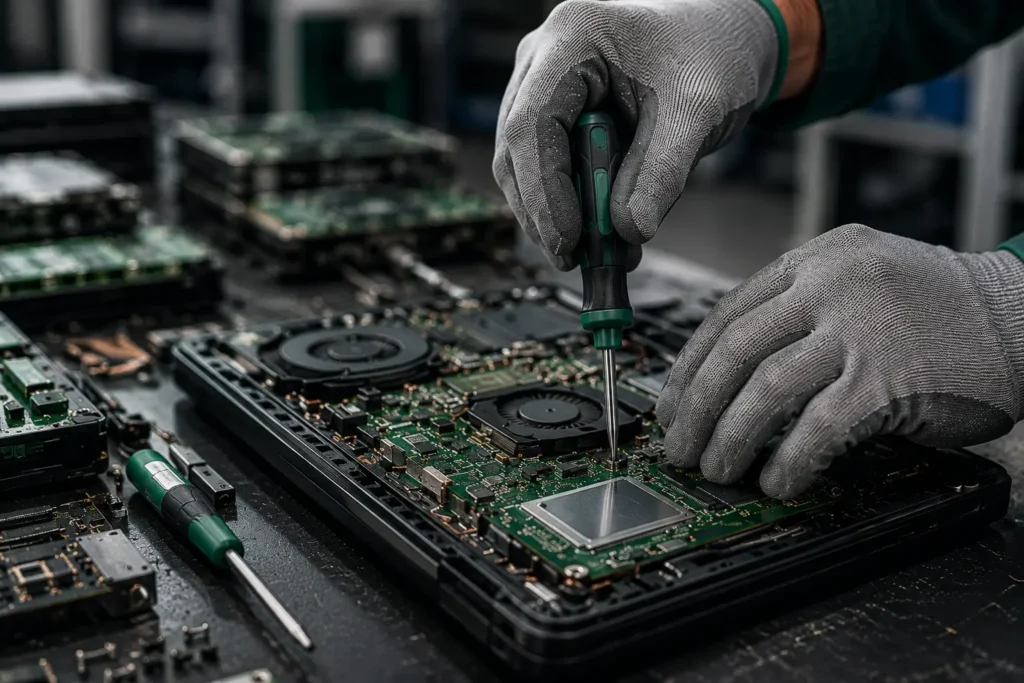
Refurbishment

Industrial systems have historically been optimised around replacement. As technology cycles accelerated, products moved through increasingly shorter periods of use – despite retaining significant functional and material value.

That model is now being reconsidered. Across industries, refurbishment is emerging as a strategic capability within the broader circular economy.

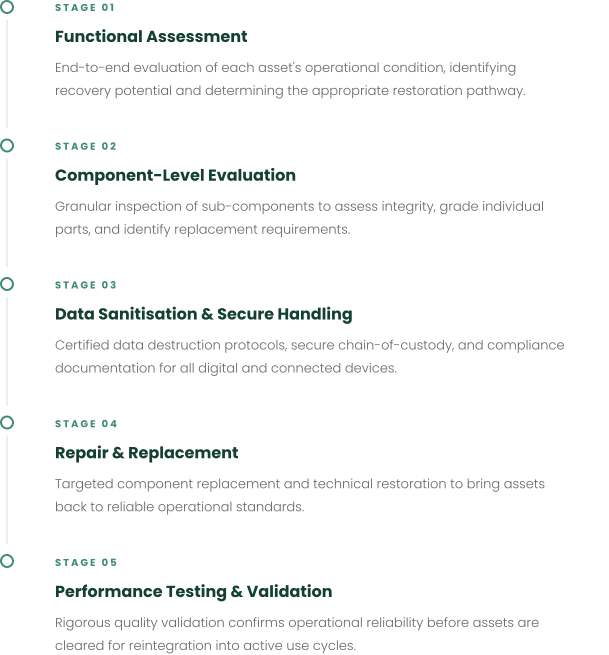
Structured process stages from assessment to reintegration
0 +

Extended.

Operational life across enterprise and consumer technology assets

Asset handling including data destruction and compliance
0 °

Beyond Reuse

Refurbishment is fundamentally different at scale.

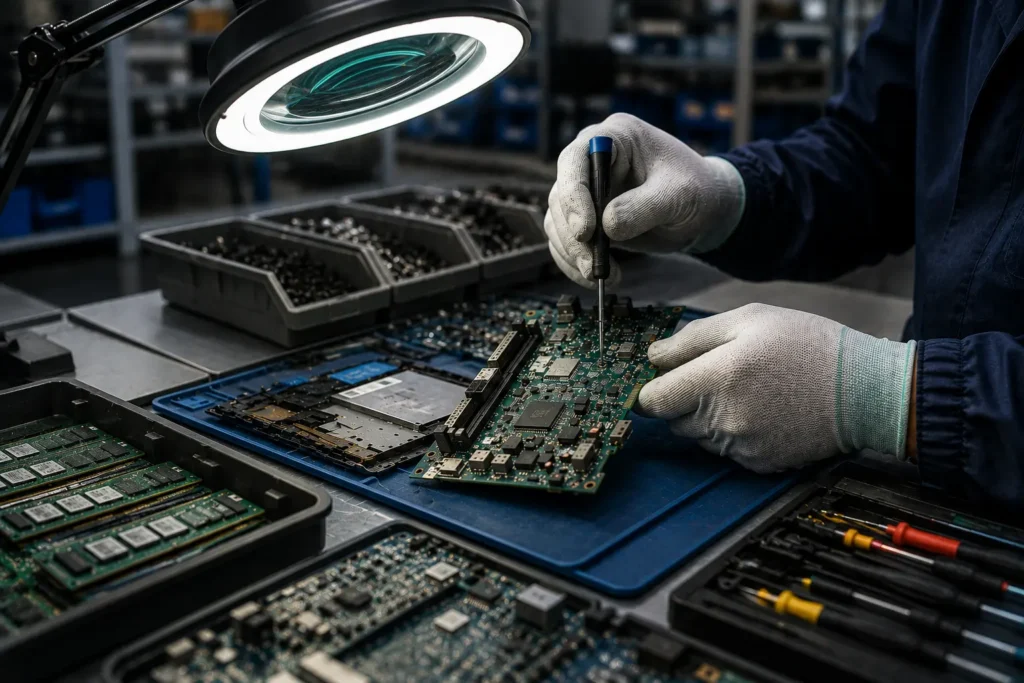
It is often misunderstood as simple repair or resale. In reality, it involves the systematic restoration, validation, and reintegration of products into active use cycles through controlled technical and operational processes.

“Materials move through industrial systems in cycles: not endpoints.”

Refurbishment enables multiple layers of value to remain active within the economy for longer durations – functional, component, material, and infrastructure value.

Refurbishment Process

Blackgold's Perspective

Technology products are assets, not short-cycle consumables.

At Blackgold, refurbishment is viewed as a strategic layer within circular resource systems. As circular systems mature, refurbishment will play an increasingly important role in reducing material intensity while improving long-term resource efficiency.

Products retain layered dimensions of value that structured lifecycle management keeps active within the economy for longer durations.

Functional Value

Component Value

Material Value

Infrastructure Value

Blackgold treats refurbishment as structured infrastructure, not opportunistic resale – enabling materials and functionality to remain economically productive across multiple ownership cycles.

Technology Systems as Recoverable Assets

Refurbishment and lifecycle extension systems today span both enterprise
technology and consumer appliances. Many of these products retain
substantial operational capability beyond first ownership cycles when
processed through structured recovery systems.

Laptops & Desktops

Enterprise and consumer
computing devices assessed,
restored, and reintegrated into
active productivity environments.

Enterprise IT Infrastructure

Servers, storage systems, and data centre hardware handled through controlled lifecycle management workflows.

Networking & Telecom Equipment

Routers, switches, and communications infrastructure
evaluated for functional recovery and reintegration.

Mobility Devices

Smartphones and tablets processed through certified data destruction, grading, and technical restoration.

Industrial & Home Systems

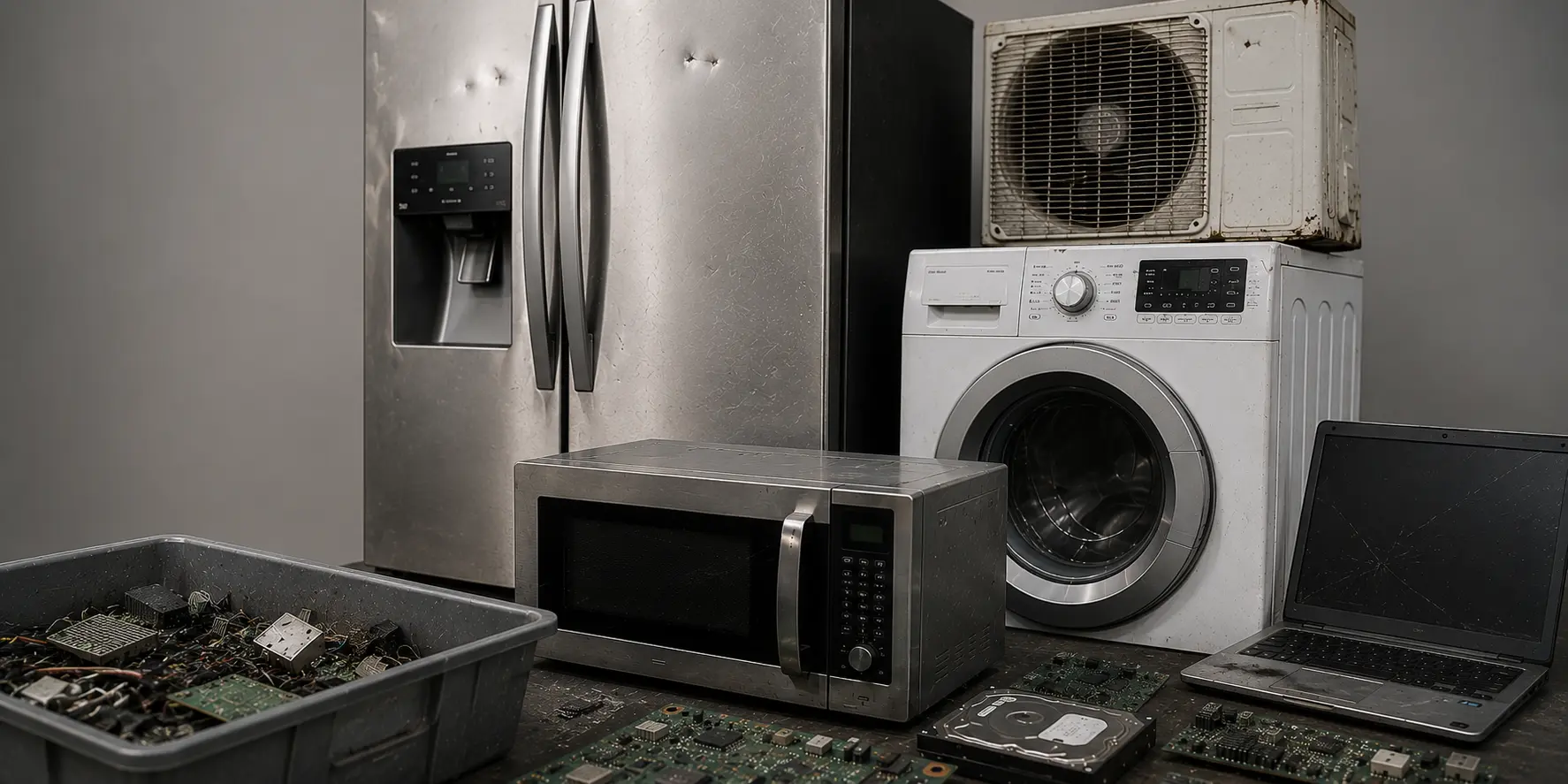
Appliances & Industrial Electronic Systems

Air conditioning systems, cooling equipment, home and kitchen appliances, consumer electronics, and smart devices – all evaluated for lifecycle extension potential. Products no longer viewed as short-term consumables, but as recoverable operational assets capable of extended utility.

Secure & Controlled Asset Handling

Refurbishment as structured infrastructure capability.

In both enterprise and consumer environments, refurbishment
depends on disciplined asset handling and lifecycle control. This transforms refurbishment from a resale activity into a structured infrastructure capability supporting product recirculation, lifecycle optimisation, and responsible asset management.

Handling Protocols

Controlled Chain-of-Custody

End-to-end traceability of every asset from collection through reintegration, ensuring accountability at each transition point.

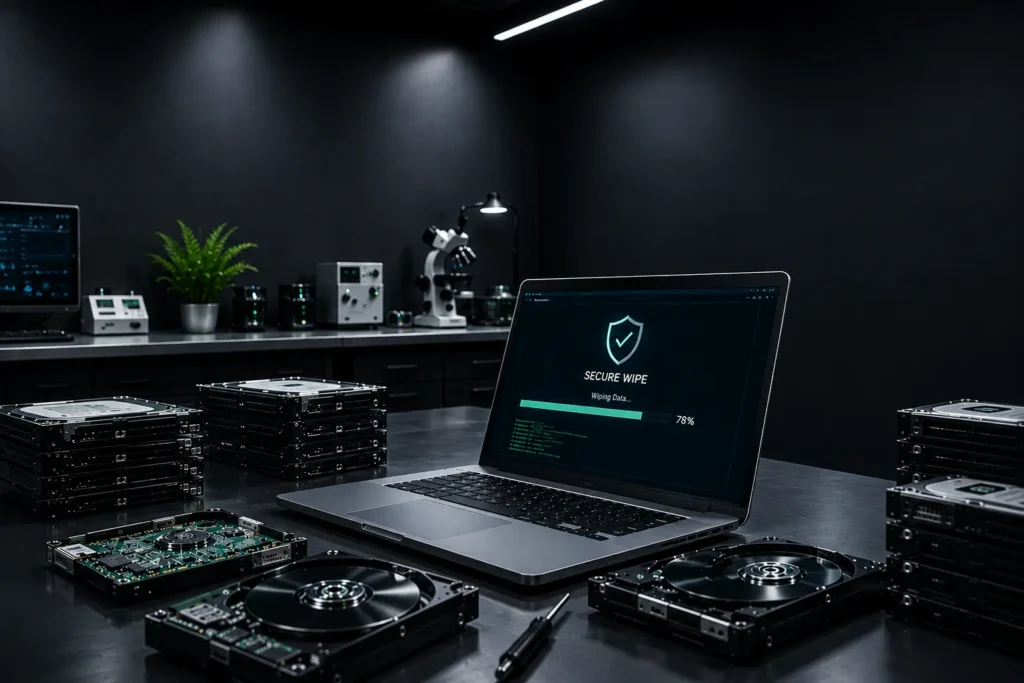
Certified Data Destruction

Certified erasure and physical destruction protocols for digital devices, aligned with enterprise compliance and security requirements.

Secure Storage Media Handling

Controlled processing of storage devices and connected equipment with documented handling under security protocols.

Technical Inspection & Validation

Systematic performance validation at each stage of restoration to confirm operational reliability before reintegration.

Traceability & Compliance Documentation

Full audit trail and compliance documentation covering every asset across its lifecycle extension journey.

Frequently Asked Questions

Core insights into enterprise hardware refurbishment, certified restoration standards, and how Blackgold executes structured asset recovery across enterprise and commercial technology ecosystems.

Large-scale refurbishment at BlackGold is an industrial engineering process that converts retired IT assets and commercial electronic appliances into factory-certified, high-performance hardware. Moving far beyond secondary resale, BlackGold processes high-volume streams—from enterprise servers and networking gear to commercial HVAC units and smart facility electronics—through an advanced restoration engine:

  • Automated Micro-Triage: High-speed telemetry diagnostics to detect silicon degradation, electrical flaws, and mechanical wear.

  • Factory-Spec Re-Engineering: Component-level repairs, board fixes, and thermal system optimization using OEM-compliant parts.

  • Zero-Trust Data Sanitization: Certified NIST 800-88 data erasure for IT media and smart-appliance microcontrollers with serialized audit logs.

  • Simulated Stress Validation: Rigorous full-load computational and environmental testing to guarantee zero-defect operational uptime.

  • Immutable Chain-of-Custody: Serialized digital tracking from intake to dispatch for audit-ready ESG, security, and financial compliance.

This multi-category recovery model enables enterprises to redeploy mission-critical infrastructure at a 40% to 60% CapEx savings while eliminating e-waste and suppressing Scope 3 embodied carbon emissions.

Partnering with Blackgold for enterprise hardware refurbishment delivers direct financial, operational, and environmental advantages:

  • CapEx Optimization: Cuts technology procurement costs by 40% to 60% compared to purchasing brand-new OEM equipment.

  • Supply Chain Resilience: Eliminates long manufacturing lead times and semiconductor delays by sourcing fully restored, deployment-ready assets instantly.

  • Maximized ROI: Captures the deep remaining utility of existing hardware investments without sacrificing processing power or reliability.

  • Scope 3 Decarbonization: Suppresses embodied carbon emissions by eliminating the heavy environmental footprint required to manufacture replacement electronics.

Blackgold operates specialized refurbishment pipelines engineered to process and re-certify diverse hardware ecosystems:

  • User Endpoints: Enterprise-grade laptops, desktop workstations, monitors, and thin clients.

  • Data Center Infrastructure: Rack and blade servers, enterprise storage arrays (SAN/NAS), high-density chassis, and power distribution units.

  • Networking & Telecom: Managed core switches, enterprise routers, edge firewalls, and voice gateways.

  • Enterprise Mobility: Business-class smartphones, fleet tablets, and ruggedized barcode or logistics scanners.

  • Facilities & Industrial Systems: Commercial HVAC units, environmental control modules, and enterprise-grade appliances.

Blackgold’s refurbishment model preserves assets at their highest functional utility tier, keeping intact systems operating at peak performance. E-waste recycling, by contrast, is an end-of-life destruction process that breaks non-functional hardware down into raw commodities like plastic, copper, and precious metals.

Blackgold prioritizes industrial refurbishment over scrap recycling because reusing complete systems prevents the massive energy expenditure and carbon output required to manufacture new electronics from raw materials.

BlackGold enforces a zero-trust security framework throughout the entire refurbishment journey:

  • Certified Software Sanitization: Executes high-level, multi-pass data erasure strictly compliant with NIST 800-88 Rev. 1 and DoD 5220.22-M standards.

  • Physical Media Destruction: Non-sanitizable or damaged hard drives undergo industrial shredding to compliant particle sizes.

  • Secure Chain-of-Custody: Utilizes GPS-tracked transit, locked transport containers, and tamper-evident barcoded logging from point of pickup to facility intake.

  • Audit-Ready Documentation: Issues a serialized Certificate of Data Destruction (CoDD) for every storage medium to guarantee full regulatory compliance.

BlackGold operationalizes circular economy principles for modern enterprises by replacing linear “take-make-waste” hardware management with sustainable asset cycles.

Refurbishing hardware through Blackgold prevents electronic waste from hitting landfills, curtails virgin material extraction, and directly drives down Scope 3 supply chain emissions. Blackgold provides verifiable, audit-ready metrics that seamlessly plug into global ESG reporting frameworks such as GRI, SASB, and CDP.

Blackgold embeds continuous serial-level tracking into every step of the refurbishment lifecycle. From initial logistics collection and diagnostic assessment to data sanitization, component replacement, final re-certification, and redeployment, every touchpoint is logged in a centralized audit system.

This complete operational transparency provides IT leadership, compliance officers, and risk teams with verifiable proof of hardware authenticity, security compliance, and environmental stewardship.

Blackgold embeds continuous serial-level tracking into every step of the refurbishment lifecycle. From initial logistics collection and diagnostic assessment to data sanitization, component replacement, final re-certification, and redeployment, every touchpoint is logged in a centralized audit system.

This complete operational transparency provides IT leadership, compliance officers, and risk teams with verifiable proof of hardware authenticity, security compliance, and environmental stewardship.