
Solar energy has scaled into a primary layer of global energy systems. As this build-out matures, a second- order question is emerging: how will solar systems be sustained beyond their first lifecycle? Blackgold is building the answer.
At Blackgold, solar infrastructure is viewed through a lifecycle lens, where energy generation is one phase within a longer material journey.
As the circular economy evolves, Blackgold intends to expand into solar panel recovery, aligned with the progression of renewable systems toward material continuity.
This reflects a broader belief: that the next phase of sustainability will be defined not only by how clean energy systems are built, but by how their materials are sustained beyond their initial service life.
Solar panels are engineered for durability with operating lifespans extending over decades. Yet over time, a structural reality takes hold deployed capacity begins to age, underperform, and approach end-of-life thresholds.
Panels operate at rated efficiency. Energy output is stable and predictable. Minimal maintenance required across utility, industrial, and distributed installations.
Degradation begins at approximately 0.5–1% per year. Output slowly decreases below rated capacity. Technology advances begin making newer alternatives economically attractive.
Higher-efficiency modern panels reduce the payback period for replacement. Early decommissioning decisions begin in select installations and geographies with aggressive upgrade cycles.
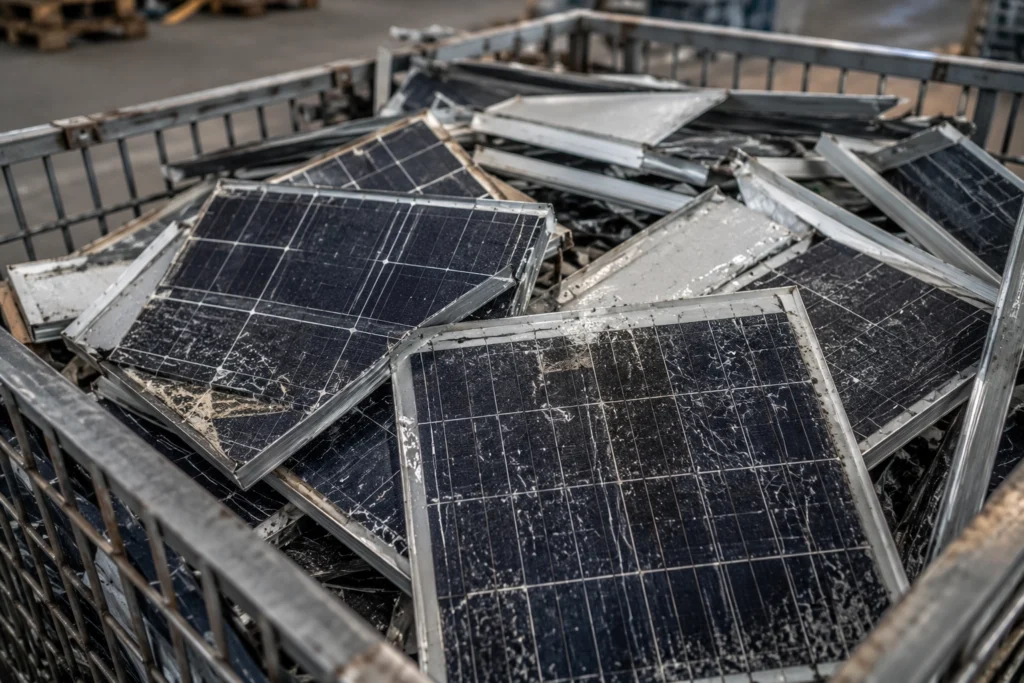
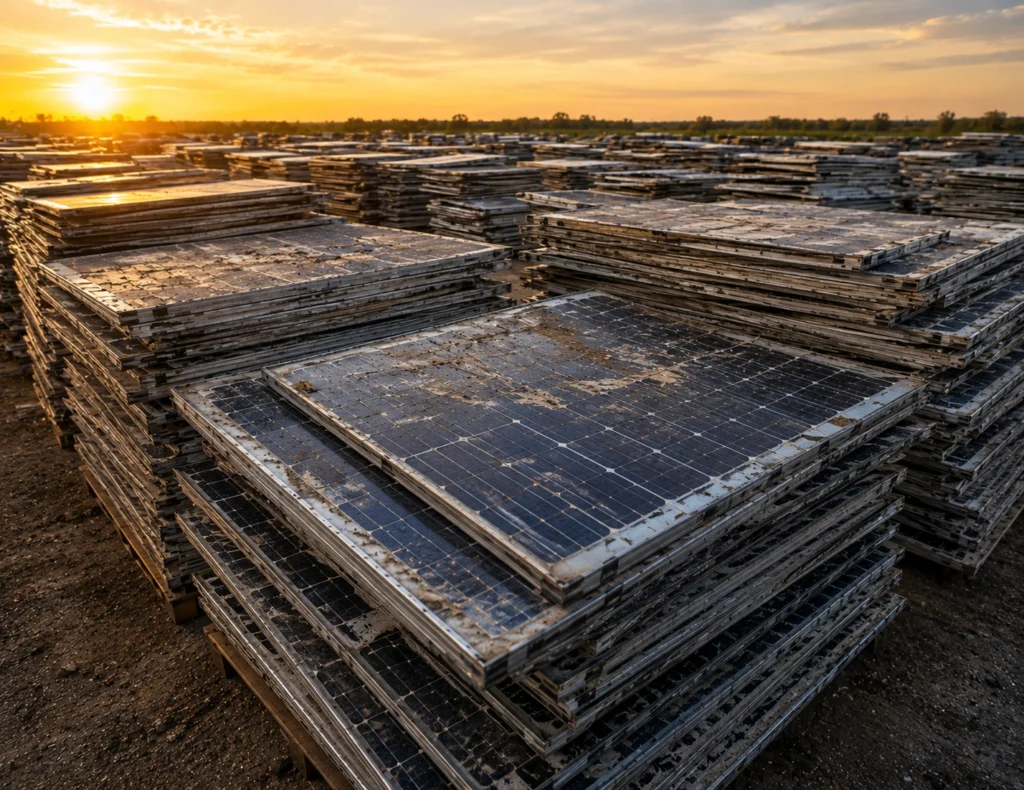
Performance falls below economic viability thresholds. Panels must be decommissioned. Without recovery infrastructure, materials enter informal or landfill channels, representing irreversible loss.
At scale, energy infrastructure inevitably becomes material infrastructure. The question is not whether decommissioning occurs, it is whether the materials are recovered when it does.
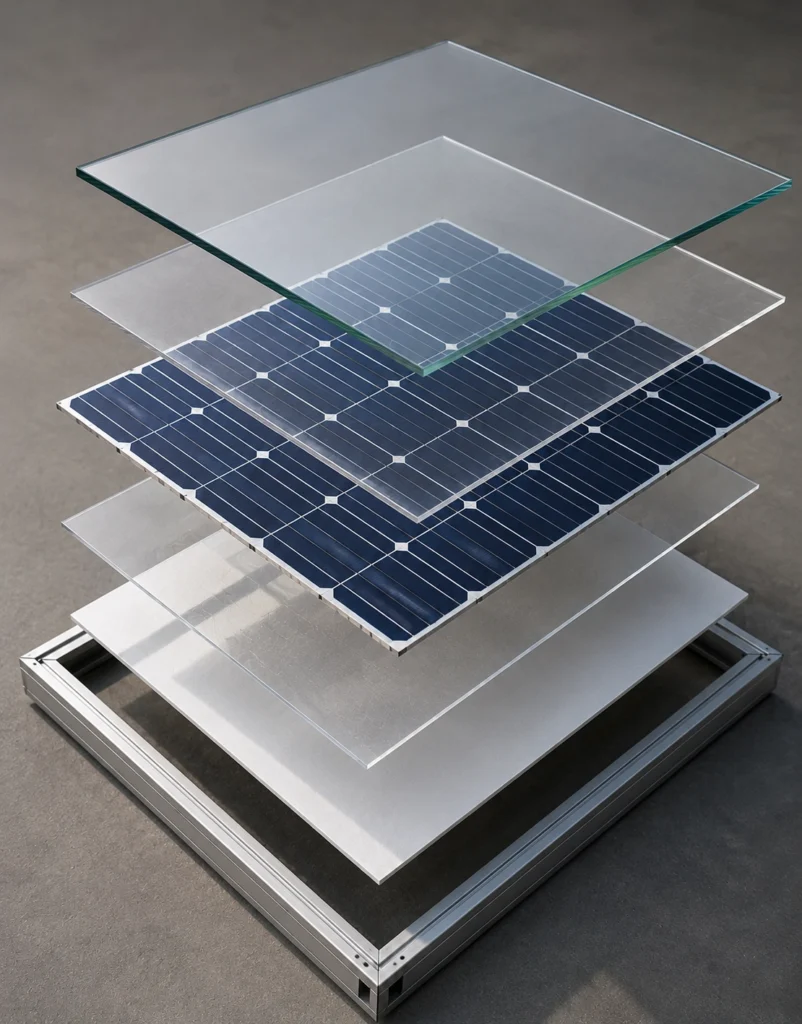
A photovoltaic panel is not a single material, it is a precisely engineered composite system. Each layer serves a performance function. Each layer is also a recoverable industrial input when approached with the right processes.

Tempered low-iron glass — the largest single component by weight, recoverable for industrial reuse
Structural aluminium alloy — separates cleanly and is directly recyclable at high value
Crystalline silicon — the active photovoltaic layer containing the highest concentration of strategic material
Copper and silver traces embedded in cell interconnects — small volume, high unit value

EVA and backsheet materials — bonding and weatherproofing layers requiring thermal or chemical separation
Solar energy has been rightfully positioned as a clean energy solution. But the full equation of sustainability requires that the materials enabling that energy generation are also sustainably managed across their lifecycle.
Without recovery infrastructure, solar’s clean energy case is undermined at end-of-life — and the strategic materials embedded in panels are permanently lost to landfill or informal channels.

Solar energy is only fully renewable if its material cycle is closed — generation and recovery must be designed as a complete system, not separate phases.

High-value materials — silicon, silver, copper — embedded in panels are finite and strategically important. Loss to informal channels represents permanent supply chain depletion.

Extended Producer Responsibility frameworks for solar panels are actively developing across major markets — recovery infrastructure built today positions ahead of mandatory compliance cycles.
Key questions on solar panel lifecycle management, material recovery, and how Blackgold is approaching this emerging vertical.
With panels typically operating for 20–30 years, end-of-life planning is often treated as a distant concern rather than a present one. But by the time performance drops below economic viability, having a recovery pathway already in place makes the difference between materials being reclaimed or lost to informal channels.
A solar panel is a layered composite: high-purity tempered glass (~78% of weight), aluminium framing (~8%), crystalline silicon semiconductor cells (~5% the highest concentration of strategic material despite the small share), plus copper and silver conductive traces and encapsulation polymers requiring thermal or chemical separation.
Efficiency loss is gradual, so panels that fall below rated capacity for one application may still have functional value elsewhere, depending on how far degradation has progressed. Past a certain point, though, replacement economics shift and recovery of the underlying materials becomes the more viable path forward.
Projected solar panel waste in India alone is expected to reach over 1.8 million tons by 2030, a volume that current recovery infrastructure isn’t yet built to absorb. Businesses operating at scale in solar need to think about this now, before it becomes an operational bottleneck rather than a future consideration.
Glass makes up the largest share by weight, but aluminium framing separates cleanly at high value, and the silicon cells contain the highest concentration of strategically important material despite their small share of total weight. Recovery approaches need to account for this uneven value distribution rather than treating the whole panel as one material stream.
BlackGold’s solar panel recovery operations are launching in 2028 building collection, processing, and material recovery infrastructure ahead of the volume inflection expected as first-generation installations reach end-of-life. This positions BlackGold to be ready before the wave arrives rather than reacting once it does.
Solar is positioned as clean energy, but that story is incomplete if the materials enabling it are permanently lost to landfill at end-of-life. A closed material loop, where generation and recovery are designed as one system rather than separate phases, is what makes the full lifecycle genuinely sustainable.
Pilot operations are launching in 2028, building the collection, processing, and material recovery infrastructure ahead of the volume inflection. If you manage solar infrastructure and want to be part of this system, we want to hear from you.
Safe collection, processing, and hydrometallurgical recovery of lithium-ion battery packs from EVs, consumer electronics, and storage systems.
Secondary extraction of lithium, cobalt, nickel, and rare earths from end-of-life products — reintegrated into manufacturing at 99.2% purity.
End-to-end processing of consumer and industrial electronics with certified material recovery, full audit documentation, and chain-of-custody traceability.