
Lithium-Ion Battery Recycling

Electrification is reshaping global industry. At the center of this transition is the lithium-ion battery. Blackgold is building the recovery system that ensures these materials are not lost — but systematically recovered and reintroduced into production.

A Parallel System Is Required

With the rapid increase in lithium-ion battery production, disposing and recycling them properly is no longer optional — it is an environmental and industrial necessity.

Our battery recycling services ensure that used batteries are safely collected, processed, and managed to mitigate the risks of hazardous waste. We comply with strict environmental standards, providing a secure and scalable solution for battery waste management.

As deployment scales across mobility, energy, and infrastructure, a parallel system is required — one that ensures these materials are not lost at end-of-life, but systematically recovered and reintroduced into production.

Complex Materials, Strategic Value

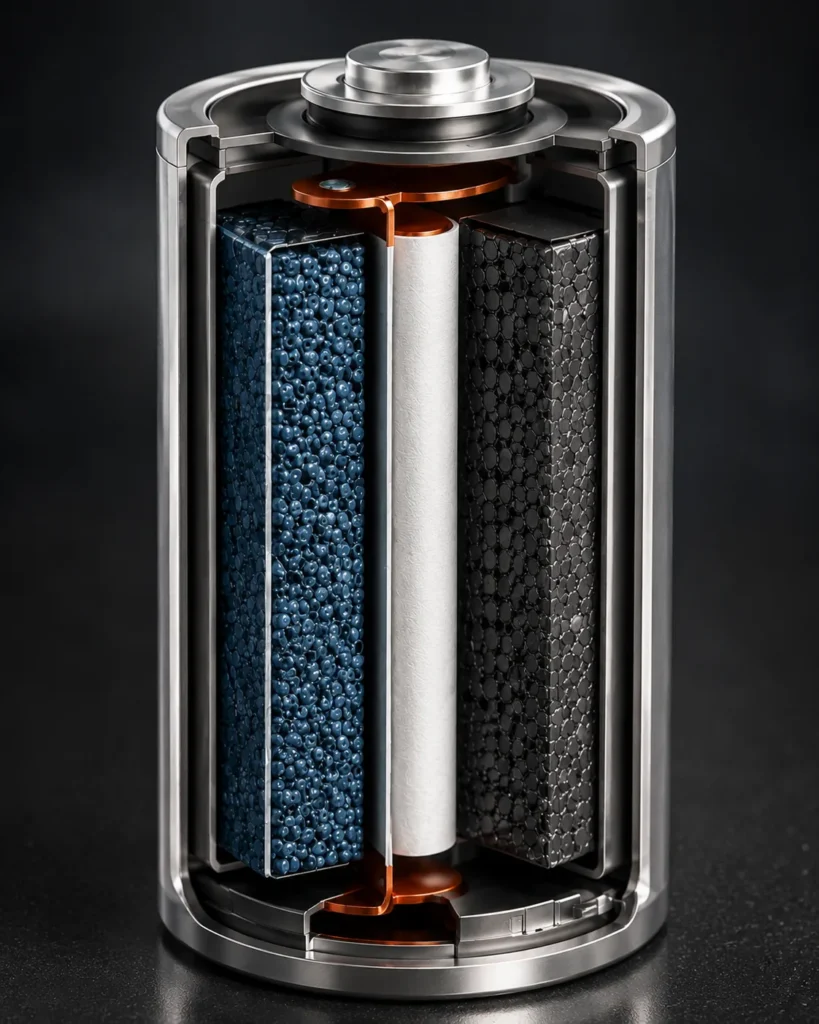
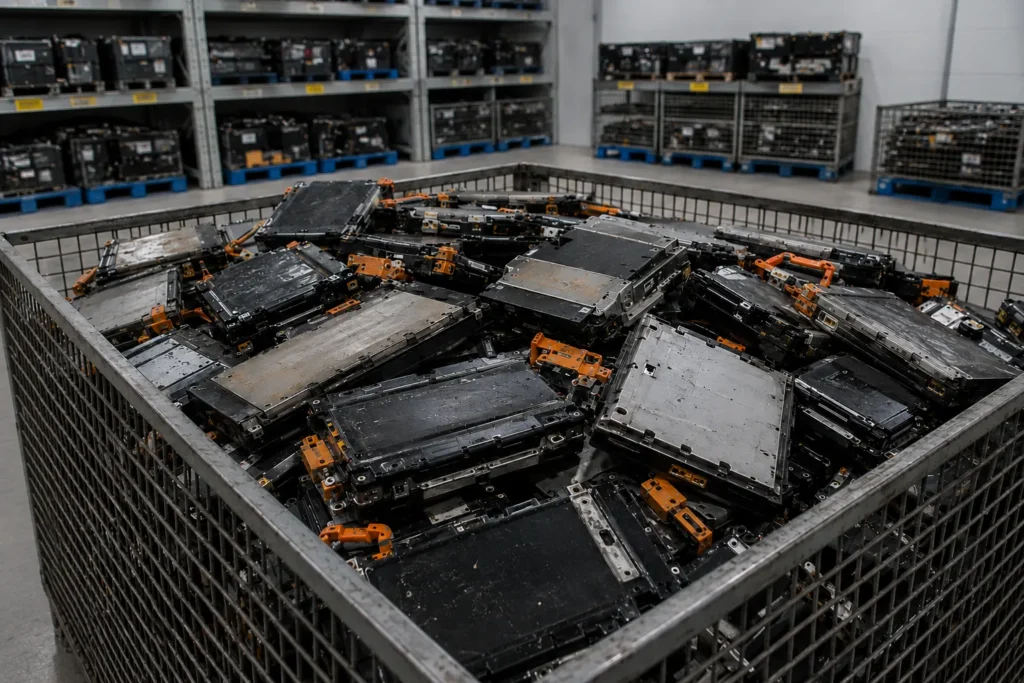
Lithium-ion batteries are complex material systems engineered from critical, finite resources. These materials are capital-intensive to extract and strategically significant for global industry.

End-of-life batteries therefore represent not waste — but recoverable resource pools.

They Power

Electric Mobility

EVs, 2-wheelers, commercial fleets

Distributed Energy

Grid storage, solar systems

Digital Infrastructure

Devices, telecom, data centers

The Structural Gap

Global battery deployment has outpaced recovery infrastructure. The result is a structural imbalance:

In India, this gap is further amplified by

Chemistry Defines Complexity

Not All Batteries Are Equal

Lithium-ion batteries are not uniform. Different chemistries
require differentiated recovery pathways — making industrial-
scale systems, not fragmented operations, the only viable
approach.

This variability introduces processing complexity, safety
considerations, and value recovery challenges that demand
structured expertise and purpose-built infrastructure.

LFP

LITHIUM IRON PHOSPHATE
EVs, stationary storage — long cycle life

NMC

NICKEL MANGANESE COBALT
Premium EVs — high energy density

LCO

LITHIUM COBALT OXIDE
Consumer electronics — compact systems

NCA

NICKEL COBALT ALUMINIUM
High-performance EV applications

Not Waste Management.
Material Recovery.

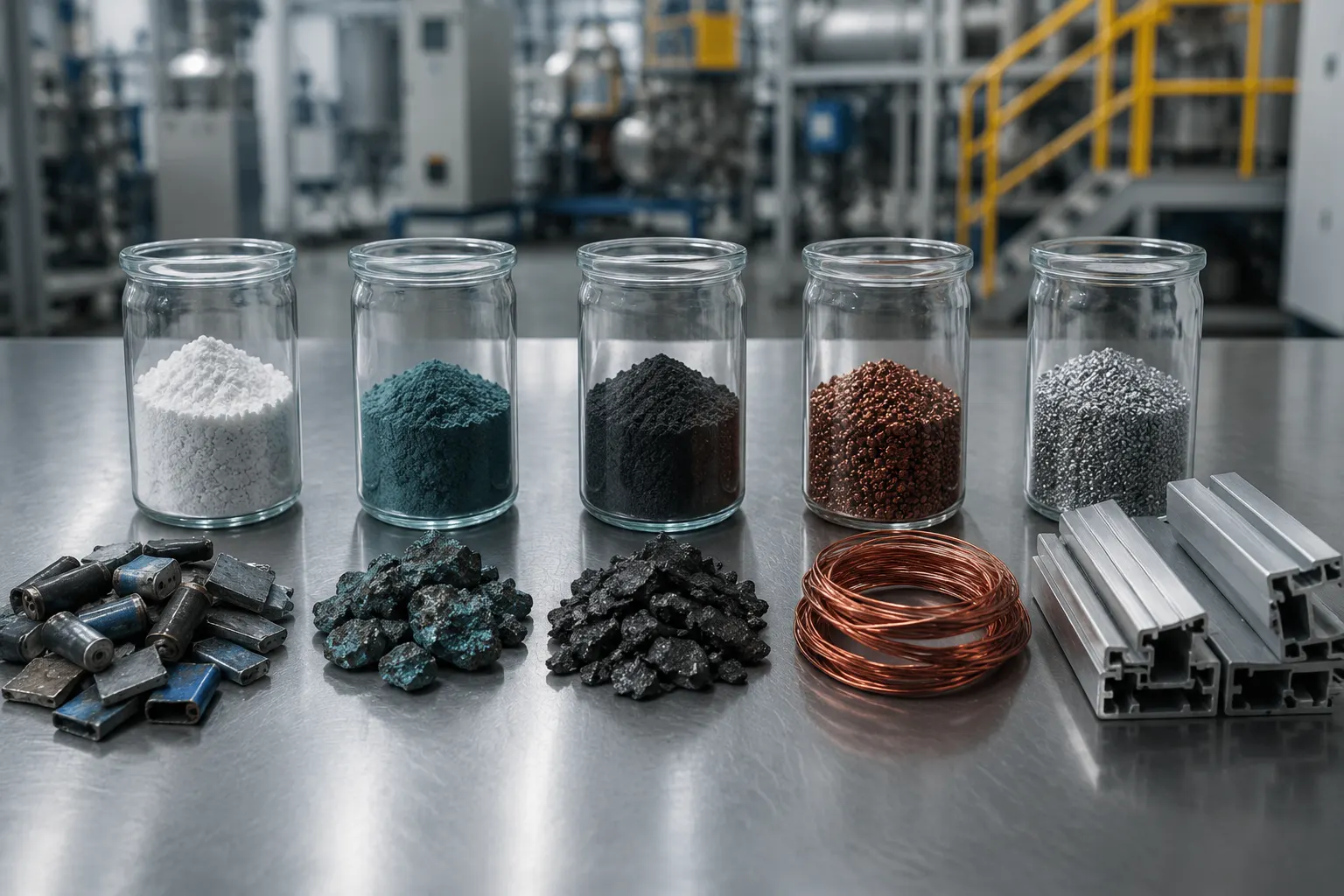
Battery recycling is often framed as disposal. In reality, it is a precision material recovery process — extracting finite, high-value resources and returning them to industrial supply chains.

Lithium

Battery-grade recovery

Cobalt

High market value

Nickel

Reintegration ready

Copper

Industrial input

Aluminium

Structural recovery

Why This Matters

Four Reasons This Cannot Wait

E-Waste

End-to-end processing of consumer and industrial electronics — from collection and dismantling to certified downstream material recovery. Full audit trail included.

PlasticS

High-grade post-industrial and post- consumer plastic processing. Multi-resin segregation, pelletization, and quality- assured secondary material output for manufacturing.

Li-Ion Battery

Safe collection, thermal management, and hydrometallurgical processing of lithium-ion battery packs from EVs, consumer devices, and energy storage systems.

Critical Mineral Extraction

Recovery of cobalt, lithium, nickel, copper, and rare earth elements from end-of-life devices — delivering secondary materials to domestic and global supply chains.

Our Approach

Circular Resource Engineering

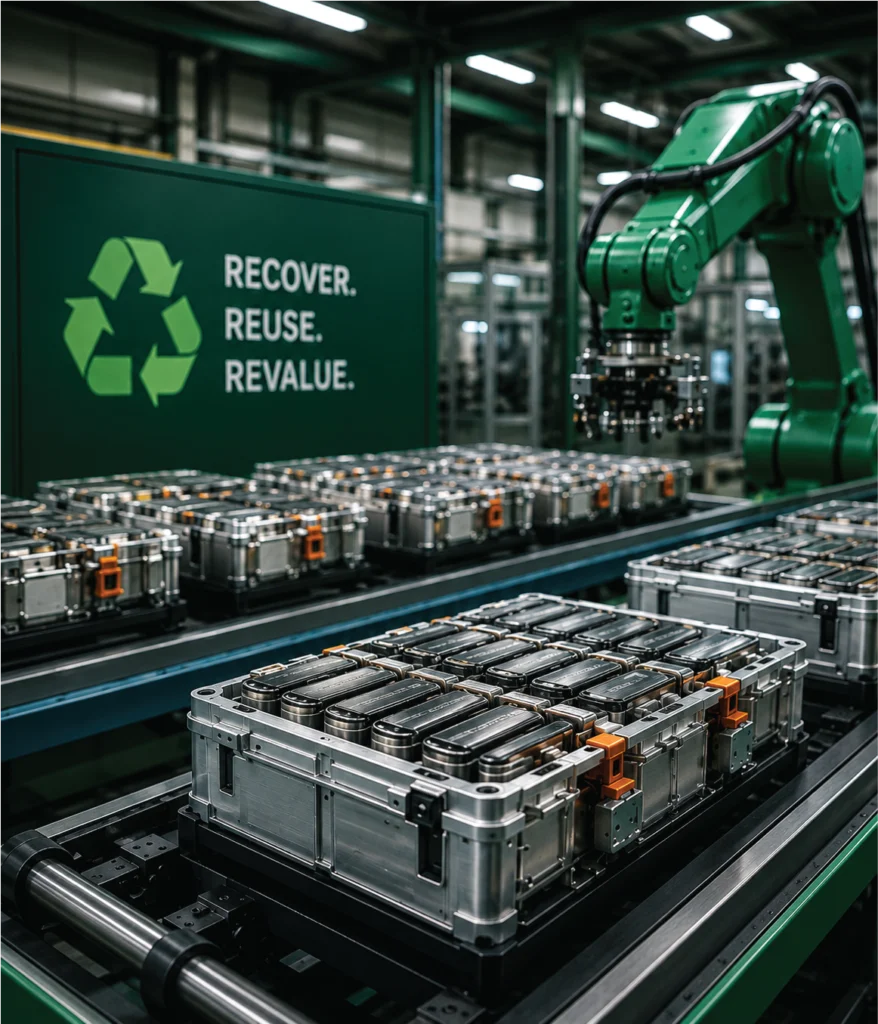
Blackgold is expanding into this vertical with a systems-led approach —
designed to operate at industrial scale. Our focus is on building an integrated
model, not a fragmented operation.

Aggregation of Fragmented Streams

Structured collection across consumer, enterprise, and
industrial sources — bringing dispersed battery waste into a
centralized, compliant recovery system.

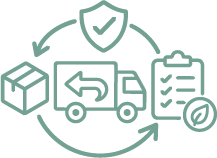
Safe, Compliant Reverse Logistics

Hazardous material transport protocols, chemistry-specific
handling, and full regulatory compliance at every stage of the
reverse supply chain.

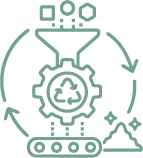
Advanced Processing & Material Recovery

Mechanical dismantling, thermal pre-treatment, and
hydrometallurgical extraction — delivering high-purity
secondary material outputs at industrial volume.

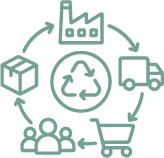
Reintegration into Supply Chains

Recovered materials are fed directly back into battery
manufacturing and industrial supply chains — closing the
loop and reducing dependence on primary extraction.

FAQ

Common Questions

Everything you need to know about lithium-ion battery recycling, our processes, and how Blackgold approaches this critical vertical.

1. What should businesses do with lithium-ion batteries once they reach end-of-life?

End-of-life batteries need to move through a structured recovery process rather than general disposal, given the fire and safety risks involved. Businesses managing EV fleets, industrial equipment, or enterprise devices should route these batteries through certified collection and processing channels designed to handle them safely.

BlackGold recovers five critical minerals per processing cycle: lithium, cobalt, nickel, copper, and aluminium through mechanical dismantling, thermal pre-treatment, and hydrometallurgical extraction, with capacity expanding ahead of the coming wave of EV battery retirements.

BlackGold’s process is built to handle LFP, NMC, LCO, and NCA chemistries, each requiring differentiated recovery pathways LFP and NMC common in EVs and stationary storage, LCO in consumer electronics, and NCA in high-performance EV applications. Processing complexity, safety protocols, and material recovery all vary by chemistry, which is why a single industrial-scale system rather than fragmented handling is required.

BlackGold’s battery recovery operations run under full compliance with CPCB hazardous waste handling regulations and applicable EPR frameworks across all battery categories, with hazardous material transport protocols and chemistry-specific handling built into the reverse logistics process at every stage.

Lithium-ion batteries carry real thermal and fire risks if mishandled, especially when aggregated in volume across a fleet or facility. Structured collection, chemistry-specific handling, and compliant reverse logistics reduce that operational risk considerably compared to informal or ad hoc disposal methods.

Primary sources of lithium, cobalt, and nickel are geographically concentrated and slow to expand, which leaves manufacturers exposed to price and availability swings. Recovered battery materials offer a supplementary supply stream that isn’t tied to the same geological or geopolitical constraints.

BlackGold is investing in battery recovery infrastructure ahead of demand rather than in response to it building the aggregation, processing, and reintegration capacity needed before first-generation EV batteries retire at scale in significant volumes. This is a deliberate expansion vertical for BlackGold, positioned to absorb the anticipated volume increase as India’s EV fleet matures.

Explore More

Related Verticals

E-Waste

End-to-end processing of consumer and industrial electronics — from collection and dismantling to certified downstream material recovery. Full audit trail included.

PlasticS

High-grade post-industrial and post- consumer plastic processing. Multi-resin segregation, pelletization, and quality- assured secondary material output for manufacturing.

Critical Mineral Extraction

Recovery of cobalt, lithium, nickel, copper, and rare earth elements from end-of-life devices — delivering secondary materials to domestic and global supply chains.

Building Ahead of the Curve

Investing Before the Wave Arrives

The growth of lithium-ion batteries is inevitable. The systems required to recover them are not — they must be built deliberately, ahead of demand, with the infrastructure to absorb it.

Blackgold is investing ahead of this curve — developing the recovery infrastructure required to support a circular energy economy at the scale global industry will require.

Work With Us

Ready to Close the Battery Loop?

Whether you manage EV fleet assets, enterprise battery infrastructure, or consumer electronics at scale — Blackgold provides the compliant, audited, and scalable recovery solution your operations require.

4,600+ tons of battery waste processed per year — and expanding ahead of EV end-of-life volumes.

Full compliance with CPCB hazardous waste handling regulations and EPR frameworks across all battery categories.

5 critical minerals recovered per cycle — lithium, cobalt, nickel, copper, and aluminium — reintegrated into supply chains.

End-to-end system — collection to reintegration — managed under one integrated operational framework.